Converting an old physical share certificate into electronic form feels, on the surface, like a simple paperwork formality. Underneath, though, it marks a genuine shift in how your ownership is recorded, verified and managed going forward. Dematerialisation doesn’t change who owns the shares, but it fundamentally changes the mechanism behind that ownership, moving it from a signed paper document to a secure digital entry with a depository. Here’s a clear look at exactly how ownership changes, legally and practically, once this process is complete.
What Dematerialisation Actually Does to Ownership
The core principle worth understanding first is that dematerialisation converts the format of your ownership record, not the ownership itself.
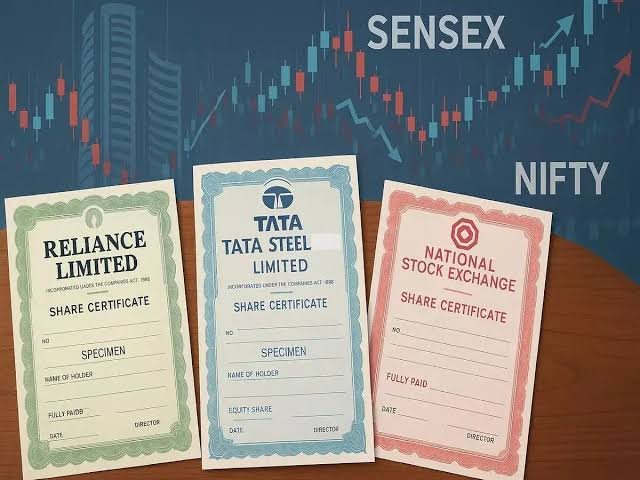
- Before dematerialisation, your ownership was evidenced by a physical certificate bearing your name, folio number, and the company’s official seal.
- After the process completes, that same ownership is represented as an electronic entry in your demat account, linked to a depository, either NSDL or CDSL.
- The number of shares you own and your rights as a shareholder remain exactly the same, since dematerialisation is purely a change in how that ownership is recorded and tracked.
- What genuinely changes is how future transactions involving those shares are handled, moving from manual, paper-based transfers to fast, secure electronic settlement.
The Verification Process Behind the Ownership Transfer
Before your physical shares become electronic holdings, a careful verification step confirms that the ownership being converted is genuinely yours.
- You submit your original physical certificates along with a Dematerialisation Request Form (DRF) through your Depository Participant.
- The company’s Registrar and Transfer Agent (RTA) verifies these details against their own records, confirming your name, folio number and shareholding match what the company has on file.
- Once verification is complete, the physical certificates are cancelled, and an equivalent electronic credit appears in your demat account, formally completing the ownership transition.
- This verification step exists specifically to protect you, ensuring that only the legitimate owner’s shares are converted, maintaining the same security standard that governs every other demat transaction.
Why Your Rights as a Shareholder Stay Fully Intact
A common and reasonable question is whether converting to electronic form changes anything about what you’re actually entitled to as a shareholder.
- Your entitlement to dividends continues exactly as before, credited directly to your linked bank account based on your shareholding, now tracked through your demat account instead of a paper register.
- Voting rights remain fully intact, and in fact often become easier to exercise, since electronic shareholding integrates smoothly with the e-voting platforms most companies use for annual general meetings.
- Your eligibility for bonus shares, stock splits and rights issues carries forward without interruption, with these corporate actions now processed automatically and reflected directly in your demat account.
- In every meaningful sense, you remain exactly the same shareholder you were before, simply with a more efficient, modern record of that ownership.
How This Changes the Way You Can Transact Going Forward
The most noticeable shift after dematerialisation shows up the next time you want to buy, sell or transfer your shares.
- Once your shares are electronic, they become eligible for trading on stock exchanges, something physical certificates can no longer support under today’s settlement rules.
- Selling becomes dramatically faster, moving from a process that once took weeks of physical paperwork to settlement within a single day under India’s current T+1 cycle.
- Transferring shares to another person, whether through a sale or a gift, now happens through secure electronic instructions rather than physically handing over a certificate and signed transfer deed.
- This shift also makes it considerably easier to pledge shares for margin trading or other financial purposes, since electronic holdings can be used this way far more smoothly than paper certificates ever could.
What Happens to Jointly Held Physical Certificates
Many older physical certificates were issued in joint names, and dematerialisation handles this structure carefully to preserve each holder’s rights.
- The electronic demat account must be opened in the exact same order of names as appeared on the original physical certificate, preserving the joint ownership structure accurately.
- All joint holders typically need to be part of the demat account the certificate is being converted into, ensuring the ownership structure transfers cleanly rather than being altered during the process.
- This matters particularly for family-held shares passed down over the years, where getting the holder sequence right makes future transfers to heirs considerably smoother.
- If the joint holding structure needs to change entirely, this is generally handled as a separate transfer process rather than something resolved during dematerialisation itself.
Updating Your Records With the Company Going Forward
Once your shares are dematerialised, the way the company itself recognises and communicates with you as a shareholder also shifts.
- The company’s shareholder records now reference your demat account details rather than the folio number tied to your old physical certificate.
- Future communications, annual reports and notices are sent based on the contact details registered with your demat account, so keeping this information current ensures you continue receiving everything relevant to your holding.
- Any future corporate actions, like dividends or bonus shares, are processed directly through this electronic record, removing the need for the company to track and mail anything to you individually.
- This also means that any address or contact update you make simply needs to happen once, through your Depository Participant, rather than being communicated separately to every individual company whose shares you hold.
How This Affects Inheritance and Estate Planning
Dematerialised holdings genuinely simplify how shares are eventually passed on to heirs, compared to the more cumbersome process physical certificates once required.
- With electronic holdings, nomination details can be set directly within your demat account, making the eventual transfer to a nominee considerably more straightforward than the process physical certificates required.
- Transmission of shares to a legal heir or nominee, when the time comes, is handled through your Depository Participant with standard documentation, generally faster than the equivalent process for physical certificates.
- This is one of the most practical long-term benefits of converting old family share certificates, since it meaningfully reduces the paperwork burden for whoever eventually inherits them.
- Many families choose to dematerialise older certificates specifically for this reason, even when they have no immediate plan to sell, simply to make future succession smoother.
A Few Practical Things to Keep in Mind
A handful of simple habits help make sure your newly dematerialised holdings stay properly organised and easy to manage.
- Confirm your holding statement reflects the correct quantity shortly after the process completes, comparing it against what your original physical certificate showed.
- Keep a record of your original certificate details, even after conversion, since this can be useful for your own reference or for any future query about your holding’s history.
- Update your nominee details within your demat account soon after dematerialising, particularly for shares that were held for a long time without this being formally set.
- Review your consolidated portfolio once your dematerialised shares join your regular demat account, giving you a clear, complete picture of everything you now hold electronically.
Frequently Asked Questions
Q1. Does dematerialising my physical shares change the purchase price recorded for tax purposes?
No, your original purchase date and price remain the basis for calculating capital gains when you eventually sell, so dematerialisation itself doesn’t reset or change your tax cost basis, it simply changes the format in which the shares are held.
Q2. Can I dematerialise only some of my physical shares in a company and keep the rest as paper certificates?
In practice, since physical share trading is no longer supported on exchanges, most investors choose to dematerialise their entire holding in a company to retain the ability to trade, though you can technically process certificates in batches if you’re converting shares from several different companies at different times.
Q3. What happens if my physical certificate has a different spelling of my name compared to my demat account?
This kind of mismatch typically needs to be resolved before the dematerialisation request can be processed smoothly, so it’s worth ensuring your name is consistent, or providing supporting documentation to the Registrar and Transfer Agent to confirm it’s genuinely the same person.
Q4. Will I be notified once my physical shares have successfully been converted to electronic form?
Yes, your Depository Participant typically confirms once the dematerialisation request is complete, and you’ll see the shares reflected as a new credit in your demat account holdings, giving you a clear confirmation that the process has finished successfully.