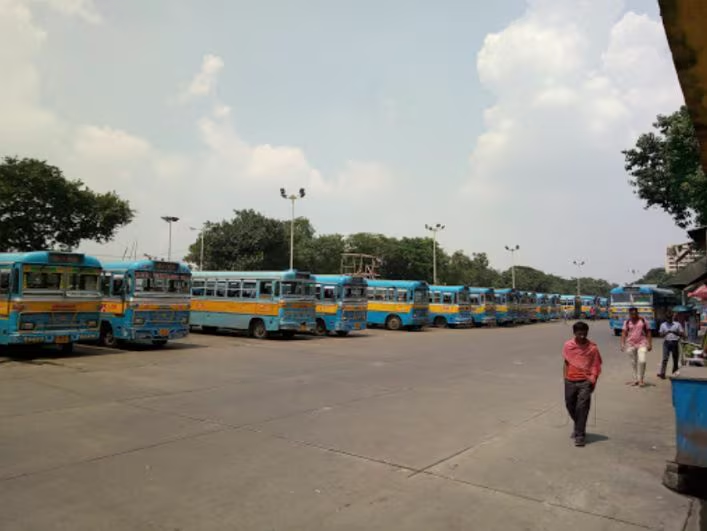
North Kolkata’s traffic funnels through Dunlop almost inevitably, whether you’re commuting from Barrackpore, heading toward Dakshineswar for darshan, or catching a long-haul bus to Siliguri or Digha. This crossing has grown into one of the city’s busiest transit points, anchored by a bus stand that connects local WBTC services, private operators, and even interstate coaches, all converging at a junction most Kolkatans navigate almost on instinct.
Dunlop Bus Stand — Quick Overview
| Detail | Information |
| Location | Dunlop, Baranagar, North 24 Parganas, Kolkata 700108 |
| Operated by | West Bengal Transport Corporation (WBTC), plus private operators |
| Nearest metro station | Baranagar and Dakshineswar (Kolkata Metro Blue Line) |
| Key local routes | Shyambazar, Howrah Station, BBD Bag, Salt Lake, Sodepur |
| Key intercity routes | Siliguri, Durgapur, Bhubaneswar, Digha, Asansol |
| Nearest airport | Netaji Subhas Chandra Bose International Airport |
| Surrounding area | Dense with shops, eateries, coaching centres, markets |
Where Dunlop Sits
Dunlop is technically a neighbourhood in Baranagar, North 24 Parganas, sitting right at the boundary where North Kolkata’s dense urban sprawl meets the more suburban stretch toward Dakshineswar and Barrackpore. Its name comes from the old Dunlop tyre factory that once operated in the area, and the crossing has retained that identity even as the neighbourhood around it has changed considerably.
The bus stand itself sits near the well-known Dunlop Right Turn Bridge, bordered by BT Road and the Belgharia Expressway, making it one of the more heavily trafficked junctions in this part of the city.
Getting to Dunlop Bus Stand
Reaching Dunlop is genuinely straightforward given how central it sits within North Kolkata’s transport network:
- By WBTC or private bus — Numerous routes running toward Dunlop, BT Road, Dakshineswar, or Baranagar stop directly here
- By metro — Both Baranagar and Dakshineswar metro stations on the Blue Line sit close by, offering a fast alternative during peak traffic hours
- By car or cab — Accessible via BT Road, the Dunlop Bridge stretch, or the Belgharia Expressway, with taxis, Ola, and Uber operating widely in the area
- By auto and e-rickshaw — Available throughout the day for shorter local hops
What Kind of Transit Point This Is
Dunlop functions less as a single enclosed terminal and more as a major bus junction where multiple route types converge:
- WBTC city buses connecting Dunlop to central Kolkata destinations like Shyambazar, Howrah Station, and BBD Bag
- Private operators running both local city routes and longer intercity services
- Interstate coaches to destinations like Siliguri, Durgapur, and Bhubaneswar, often booked in advance through platforms offering real-time bus tracking
- A dense mix of daily commuter traffic, given the neighbourhood’s role connecting North Kolkata to Barrackpore and beyond
Because Dunlop isn’t a single walled terminal with numbered platforms the way some larger ISBTs are, boarding here works more on a stop-by-stop basis tied to specific routes. Checking which exact stretch of the junction your bus uses, since Dunlop covers several nearby stops including Dunlop Bridge and Dunlop More, helps avoid confusion.
Major Routes From Dunlop
Given its position on BT Road and its metro connectivity, Dunlop’s route network splits fairly cleanly between local city travel and longer-distance journeys:
- Local and city routes – Shyambazar, Howrah Station, BBD Bag, Salt Lake Stadium, Manicktala, Sodepur, Rathtala, Dakshineswar, and New Barrackpore
- Suburban connections – Sodhpur, Nimta, Dankuni, and other North 24 Parganas towns
- Intercity and interstate services – Siliguri, Durgapur, Bhubaneswar, Digha, and Asansol, typically run by a mix of state-run SBSTC buses and private operators like Shyamoli Paribahan and Greenline
Popular local routes, such as Route 34B running between Dunlop and Esplanade via Gopal Lal Thakur Road and Tobin Road, illustrate how deeply this junction is woven into the city’s broader bus network rather than functioning as an isolated stop.
Metro Connectivity at Dunlop
One of Dunlop’s real advantages is its proximity to Kolkata Metro’s Blue Line, which has considerably eased the pressure on road traffic through this stretch:
- Baranagar metro station sits right along Belgharia Expressway, close to the bus stand
- Dakshineswar metro station, the elevated northern terminus of the Blue Line, sits a short distance further, connecting directly to the Dakshineswar Bus Terminal
- Both stations offer a genuinely faster alternative during Kolkata’s notorious peak-hour road congestion
Areas Around Dunlop Bus Stand
The neighbourhood surrounding the bus stand is dense with everyday commercial activity, useful whether you’re catching a bus or just passing through:
- Dunlop Bridge – The immediate landmark most people use to locate the bus stand
- Baranagar and Dakshineswar Metro Stations – Both within easy reach, offering onward connectivity
- Local markets and coaching centres – Clustered densely around the junction, popular with students and daily commuters
- BT Road corridor – Lined with shops, eateries, and small businesses catering to the steady flow of travelers
Frequently Asked Questions
Q1. Is Dunlop Bus Stand connected to Kolkata Metro?
Yes, both Baranagar and Dakshineswar metro stations on the Blue Line sit close to the bus stand, offering a faster alternative to road travel, particularly useful during peak-hour congestion on BT Road.
Q2. Can I catch a long-distance bus to Siliguri or Digha from Dunlop?
Yes, several private operators including SBSTC, Shyamoli Paribahan, and Greenline run intercity services from Dunlop to destinations like Siliguri, Digha, Durgapur, and Bhubaneswar, though booking ahead through online platforms is advisable during peak travel seasons.
Q3. Why does Dunlop have multiple bus stop names like Dunlop Bridge and Dunlop More?
Since Dunlop functions as a busy junction rather than a single enclosed terminal, different routes and operators use slightly different stop names within the same general area. It’s worth confirming the exact stop listed on your ticket rather than assuming all “Dunlop” references point to the same spot.
Q4. How do I get from Dunlop to Dakshineswar Temple?
Local buses and the metro’s Blue Line both connect directly to Dakshineswar, with the metro generally being the quicker and more predictable option, especially avoiding the traffic congestion common around Dunlop Bridge during peak hours.